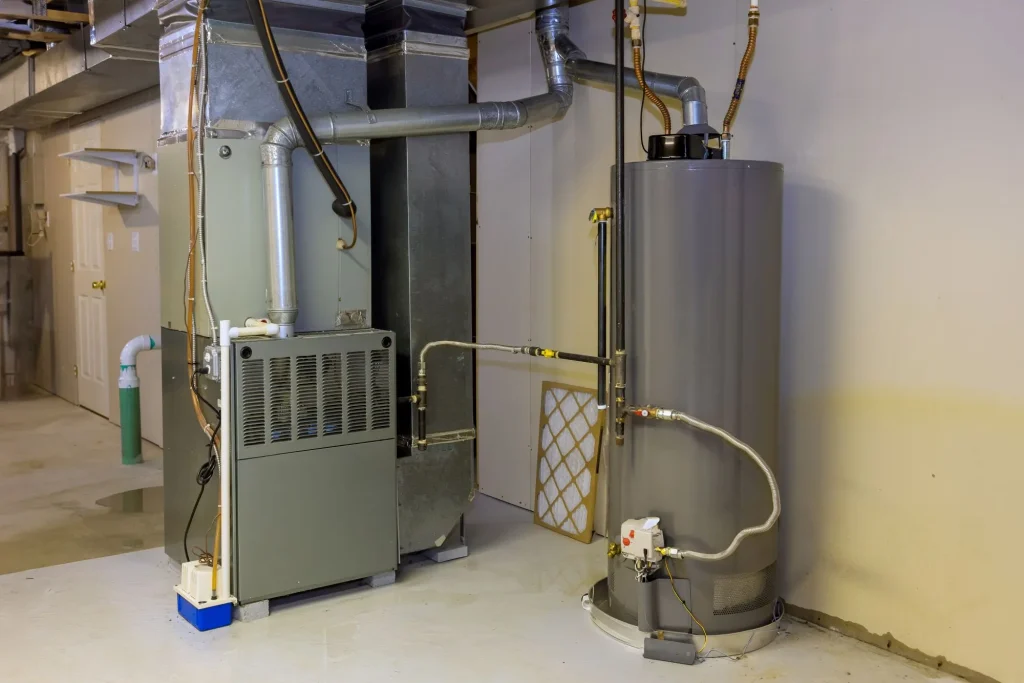
Replacing a tank water heater with a tankless unit in Edmonton is possible in many homes, but the project is not always a direct equipment swap. The home’s hot water demand, fuel or electrical capacity, venting, drainage, and available installation space determine whether a conversion is practical and what modifications are required. Nor-Can Heating & Air assesses these conditions when determining the installation scope for a tank-to-tankless conversion.
What Changes When You Replace a Tank With Tankless?
A storage water heater keeps a set volume of water hot until it is needed, while a tankless unit heats water as it passes through the equipment. Replacing one system type with the other changes more than the water heater itself because the surrounding connections must meet the requirements of the selected tankless model.
The hot and cold water piping generally needs to be adapted to the new unit. Depending on the type of tankless system, the conversion may also involve changes to the home’s gas supply, electrical setup, venting, or drainage.
Gas-fired tankless units still require electrical power for controls and other components. An electric tankless unit presents a different consideration because the home’s electrical service and panel must be capable of supporting the unit’s power requirements.
The amount of conversion work therefore depends on the existing installation and the requirements of the selected equipment rather than simply on whether there is enough room to remove the old tank.
What Must an Installer Check in Your Home?
An installer needs to evaluate both the home’s expected hot water demand and the conditions at the proposed installation location. Tankless equipment should be selected according to the demand it must serve and the temperature rise it must provide, not simply by matching the capacity of the previous storage tank.
The assessment should also establish whether the home’s gas or electrical capacity, water connections, venting, drainage, and mechanical layout can support the proposed unit. This prevents equipment from being selected before the practical installation requirements are understood.
Hot Water Demand
Tankless water heaters are sized in part according to the amount of hot water that may be required at the same time. A shower running by itself creates a different demand from a shower operating while a dishwasher, washing machine, or another hot water fixture is also in use.
Sizing also depends on temperature rise, which is the difference between the temperature of the incoming water and the required outlet temperature. In a cold climate such as Edmonton, the unit should be selected using realistic incoming-water conditions because available flow can decrease as the required temperature rise increases.
The installer should therefore identify which hot water fixtures are likely to operate simultaneously and compare that demand with the performance of the proposed unit under appropriate temperature-rise conditions. This helps avoid selecting equipment that cannot maintain the expected flow and water temperature during periods of higher household demand.
Connections, Venting, and Installation Space
The existing mechanical area needs to be checked for the water, fuel or electrical, venting, drainage, and service requirements of the selected tankless unit. A smaller appliance does not automatically make the existing water-heater location suitable for the conversion.
For gas-fired equipment, the installer needs to determine whether the existing gas piping can supply the new water heater while accounting for other connected appliances. If it cannot, modifications to the gas piping may be required.
For an electric tankless unit, the home’s electrical service, panel capacity, and available circuits need to be assessed before the equipment is selected. An existing electrical connection for a storage water heater should not be assumed to meet the requirements of a tankless unit.
Where venting is required, the proposed route and exterior termination must be compatible with the selected equipment and applicable installation requirements. If a suitable route or termination cannot be achieved from the proposed location, the installation location or overall conversion scope may need to change.
The installation area must also provide the clearances and service access required for the selected model. For condensing equipment, the installer must determine how condensate will be drained rather than assuming an appropriate drainage point is already available.
When Might Keeping a Tank System Make More Sense?
Keeping a tank system can be the more practical option when the existing home is already configured for a straightforward tank replacement but a tankless conversion would require substantial infrastructure changes. In that situation, the decision depends on whether the additional conversion work provides enough practical benefit to justify the increased scope.
Household demand can also affect the choice. A home with substantial simultaneous hot water use may require a higher-capacity tankless unit or a more involved system design to meet that demand. If the required equipment and supporting upgrades are disproportionate to the homeowner’s reason for converting, an appropriately sized storage system may remain the more practical replacement.
The existing layout should also be considered. If the proposed installation location cannot reasonably accommodate the equipment, required connections, service access, or any necessary venting, the conversion may require a different location or additional work.
Where those changes are impractical or disproportionate, the proposed tankless conversion may not be a suitable option for that particular home. Keeping a tank system can provide the required hot water without introducing unnecessary installation complexity.

What Should Your Conversion Quote Include?
A tank-to-tankless quote should separate the equipment from the work required to adapt the home for it. This allows the homeowner to understand whether the quoted price covers a complete conversion or whether important installation items could be added later.
A clear conversion quote should identify:
- The tankless unit being installed and the demand assumptions used to size it.
- Removal and disposal of the existing water heater.
- Required hot and cold water piping modifications.
- Gas piping or electrical work required for the selected unit.
- Venting and exterior termination work where applicable.
- Condensate drainage where required by the equipment.
- Permits or inspections required for the specific work under applicable local requirements.
- Startup and testing of the completed system.
- Equipment and workmanship warranty terms.
- Any known work excluded from the quoted scope.
Items that depend on conditions discovered during the assessment should be identified clearly rather than grouped into an unspecified installation charge. This is particularly important with conversions because two homes using similar tankless units can require different amounts of supporting installation work.
Nor-Can Heating & Air provides water heater replacement and installation in Edmonton. Assessing the existing water-heater setup first allows the conversion quote to reflect the equipment, connections, and installation work required for the specific home.